Microphones are cool… that’s a fact. But in a home studio setting, it isn’t about owning dozens of microphones, or even the most expensive microphones; it is about servicing your recording needs, on whatever budget you have available. Let’s dive straight in.
Identify Your Needs, and Your Limitations
Before we start looking at any specific type or kind of microphone, our jumping-off point should be thinking about what our actual needs are. Ask yourself questions regarding what you plan on actually recording; after all, there is no point in buying a full set of drum microphones if you never intend to record drums. Make a quick list of the instruments and sources you not only plan right now, but things you might want to record in the near future. And then take a look into what goes into capturing those sources in different ways.
With your needs identified, look into all the limitations, both in terms of your space, and in terms of things like budget.
In terms of space, have a look at what space you have to record in, and what its limitations are, as this can help you identify what is worth, and not worth buying. Buying a £10k Sony C800g is somewhat pointless if you are going to be recording in the equivalent of an untreated cupboard, for example.
When it comes to budget, that hopefully shouldn’t alter what you can acquire for your collection, but instead, the time-frame in which you can do it. Maybe instead of the whole collection at once, we need to add to it every few months, for example.
With a full list of needs and limitations, we can move to the most fun part… starting to shop.
Go Large, Or Go Home
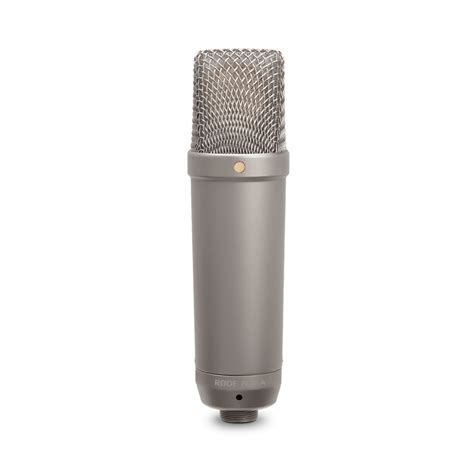
The most logical point for starting any decent microphone collection is with a large-diaphragm condenser. They’re sensitive, detailed, and better at capturing little nuances in recording that other microphone types may miss. They’re incredibly versatile, with the ability to capture vocals, acoustic and electric guitar, pianos, orchestral sources, or just room ambience in general.
For picking a first large-diaphragm condenser, try to spend what you can on something with as much versatility as you think you will need, and then some. Look to pick something up that has a good, balanced sound, good overall specs, and, if possible, multiple polar patterns. While 90% of the time Cardioid is king, occasionally Omnidirectional and Figure-of-8 are the answer.
There are plenty of manufacturers who offer low-cost, mid-priced, and premium microphones that fit the bill, including Rode, Lewitt, Audio-Technica, Warm Audio, and more. You don’t need to jump straight to their flagship model, but you may find that the more mid- and higher-priced microphones retain their usefulness and utility as time goes on, and your collection grows.
Becoming More Dynamic
Once you’ve got the collection started, it is often a good choice to go with something that couldn’t be more different from your large-diaphragm condenser, and that is where a good Dynamic microphone comes in. Dynamic microphones are far less sensitive than their bigger condenser brothers, but tend to tolerate much higher sound pressure levels, making them perfect for close-miking sources such as guitar amps and drums, and louder (and live) vocal performances.
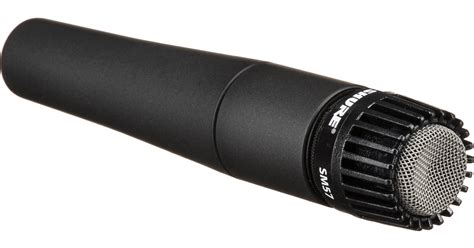
Because of their lower sensitivity, dynamic microphones tend to have tighter patterns of pickup, which can pick up a lot less of any room noise and ambience.
A dynamic microphone adds nice contrast to your collection; where a condenser is detailed and open, a dynamic generally gives a tighter, more focused result.
Due to how they record sound, dynamic microphones tend to have a more pronounced proximity effect, meaning that close miking a source does give a small low-end bump, which in many instances can lead to a performance having a fuller, weightier, more direct sound.
There is a wealth of great dynamic microphones on the market from Shure, Sennheiser, AKG and Universal Audio to name just a few.
Seeing Double
Small-Diaphragm Condensers are a great option to add even more sonic options to a growing collection of microphones. They are compact, capture detail incredibly well, and they often come as a matched pair, and that is where they shine.
A single small-diaphragm can work exceptionally well on sources like acoustic guitar, hi-hats, strings, percussion, piano, and more, but a pair of them used as a stereo pair does that but also adds extra dimension to your recordings. Capturing instruments in stereo can help capture additional width and ambience, and really put everything in its own dimensional space.
If you have never used a matched stereo pair, then it can really be eye-opening the first time that you do. And there is the added flexibility that you can use a pair of them as a pair, or as separate entities completely.
Let’s Add Character
With multiple clean-style microphones, the next step could be to add something that has its own distinct character. And that could come in one of two forms: a Tube Condenser, or a Ribbon microphone. Both are great choices, and each has its own pros and cons.
Tube Microphones
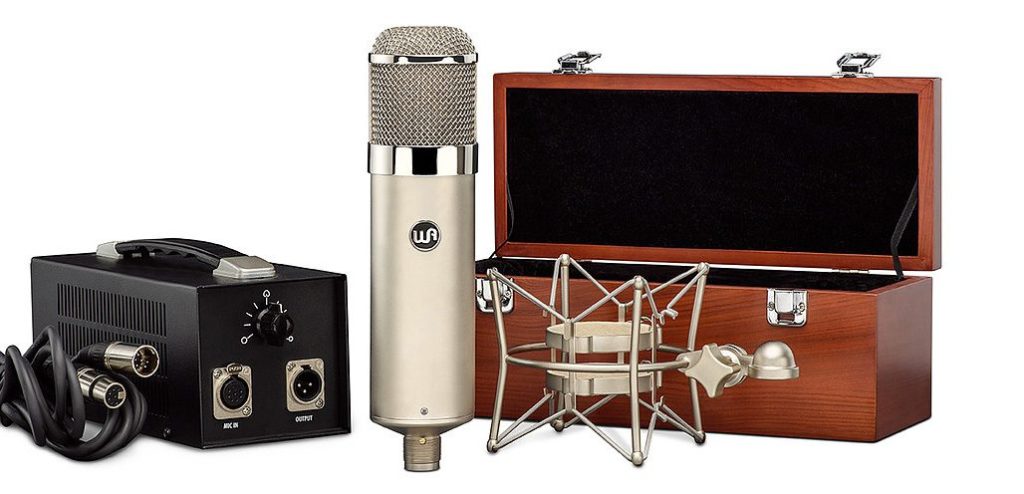
If you want to add additional character and depth to the sources you are recording, then maybe a Tube microphone could be your next addition. There is just a certain something that tube microphones tend to add that solid-state microphones don’t. While each tube mic has its own character, many words that get thrown around when talking about them are ‘warm’ or ‘rich’ or ‘round’ or ‘elevated,’ and phrases like ‘added depth.’
I personally often see a tube mic as becoming part of that sound itself, rather than just capturing a performance, and in many instances, this can lead to a more polished, finished product.
While they do have their own certain sound, they can be incredibly versatile and work on a whole range of sources such as acoustic guitar, orchestral instruments, percussion and drums, and most importantly vocals.
Another bonus to tube microphones is that, for the most part, they do tend to be multi-pattern, which in its own right gives even more versatility.
What can be seen as a downside with tube microphones is the need to use an external power supply (included when purchasing the microphone), a special 7-pin XLR, and the need for the tube to warm up adequately. But with a slight workflow change, you’ll stop noticing any additional effort needed.
There are some great affordable Tube Microphones available from manufacturers such as Avantone Pro, Rode, Warm Audio, and United Technologies.
Ribbon Microphone
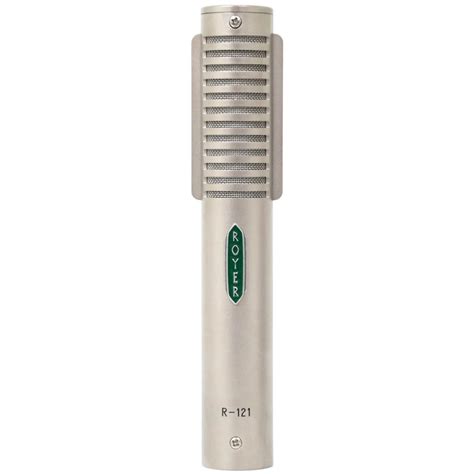
Generally, a Ribbon microphone offers smooth results that still retain a decent amount of natural top-end. They also often have a little low-frequency bump that can come in useful on many sources. Ribbon microphones can produce interesting results on a range of sources, including guitar amps, or recording brass, strings, or percussion. Due to its characteristics and sound profile, it can also tame sources that might be a little too bright, and bring them back down to earth.
Traditionally, ribbon microphones are passive and generally suffer from having a low output, so can definitely benefit from a pre-amp with plenty of clean gain, or something like a Cloudlifter (or similar alternative) between the microphone and your interface. They can also, on occasion, be quite delicate; you don’t need to quite wrap it in bubble wrap, but it isn’t particularly difficult to damage a ribbon if you overdo it.
Modern Ribbon microphones are, on occasion, designed differently, and some are in fact Active (requiring +48v Phantom Power), and some are considerably more durable than the norm.
The last thing to consider when it comes to Ribbon Microphones is that they are all Figure-of-8, and tend to have a slightly brighter side of the ‘8’ and a slightly darker side. This has both pros and cons. You can balance that bright/dark sound to achieve more results, and use the mic to also capture some room tone. One drawback is that if you don’t want that effect, you have to take extra care not to capture other things in the room.
There are some great Ribbon Microphones available from SE Electronics, Golden Age Projects, Avantone and Royer Labs.
Going Even Further
Instead of questioning what you should buy next, ask yourself ‘What problem am I trying to fix?’ or ‘What gap are you trying to fill?’
Trying to record a whole drum kit? Look into some specific Drum Kit sets.
Looking for something to brighten up a dark source? Have a look into brighter large-diaphragm condensers.
Want the opposite and need to darken a bright source? Dynamic and Ribbon mics might be what you need.
Déjà vu
One of the easiest pitfalls to fall into when it comes to building a microphone collection is finding a style of microphone you like, and buying multiples of them. Don’t get me wrong, if someone wants to give me five Neumann U47s, I wouldn’t say no, but they will all do the exact same job. Whereas five completely different-styled condensers cover five different roles. Variety, as they say, is the spice of life.
Before any purchase, ask the question, ‘What would this add to the collection?’ ‘Does it solve the problem I have?’, ‘Does it give me a new sonic flavour?’ And if the answers are all no, then maybe that might not be the right next choice.
Let’s Accessorize!
While a microphone collection is by definition a collection of microphones, it should also be supported by a collection of decent peripheral and satellite products. So sometimes that next key purchase for the collection isn’t actually a new microphone.
Do all of your microphone stands work, and keep things secure? Do your XLRs work properly without noise? Do your microphone clips hold things securely? Do you have a decent pop filter for reducing those plosives? Could you improve the performance of this mic with a new shock mount?
All questions worth answering each time you are gearing up for a new big expensive purchase. While I won’t go into too much detail, you could also look at what other additional products you could look into to improve the performance of the collection you already have; a nice pre-amp, a reflection filter, or some freestanding (or permanent) acoustic treatment to elevate the collection a bit. The possibilities are somewhat endless.
Wrapping Up
Whether your budget is £100 every few months, or many thousands in one go, the thought process is the same. A versatile collection of mics that cover as many bases as you can, and tick the boxes of any and all problems you may run into.
Learn how to use each of the microphones you have, as you get them, and develop your skills, as the collection grows. A versatile collection alongside a versatile knowledge is an extremely powerful combination.
Build both the collection and the skill-set surrounding them gradually, build a solid foundation, and add little by little, and before you know it, you’re ready for any source… Happy Recording!