In this industry, there are certain pieces of equipment that everyone has heard of, at least in passing. The 1176, the LA-2A, a 414, a U87 and the U47. These pieces of equipment probably feature in every major studio in the world, and have inspired multiple imitations and clones across a number of price points.
And that is where the Warm Audio WA47 comes in. Hailing from Texas, Warm Audio is known for creating gear based on vintage and classic gear that might not be in everyone’s budgets, that performs well. And the WA-47 is no different. On paper, the WA-47 talks the talk, but does it, in use, walk the walk?
First Impression
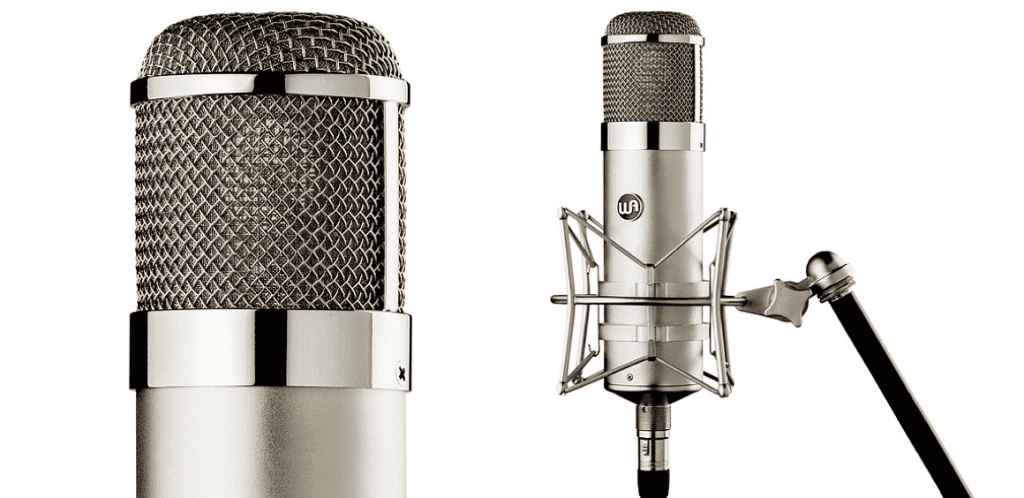
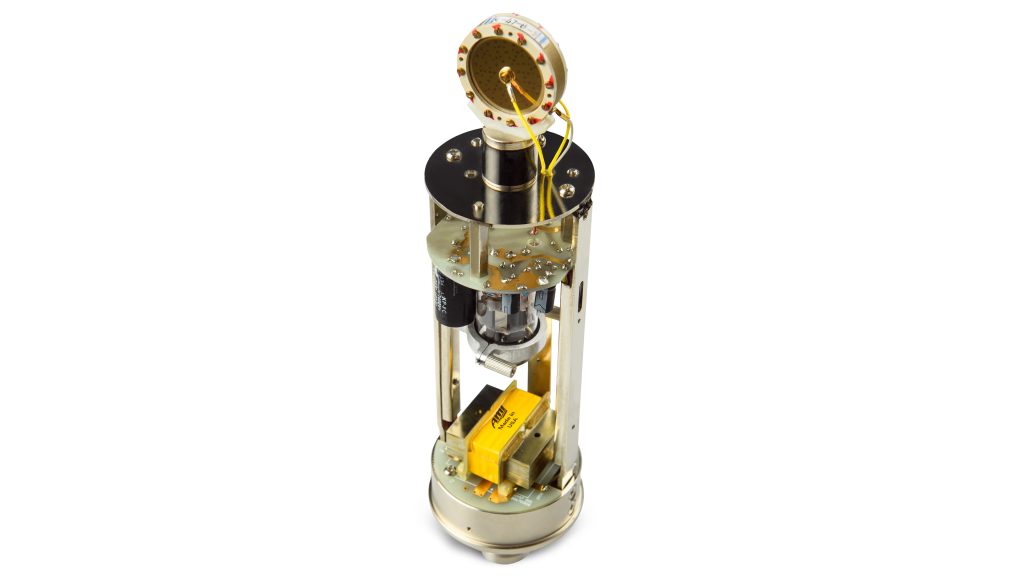
The Warm Audio WA-47 is a modern tube condenser, featuring a K47- style capsule, a 5751 tube, and a custom-built American-made AMI transformer. Unboxing the WA-47, you are presented with the microphone itself, a faux wood-effect case for the microphone, a 7-pin XLR, a shock mount, and a power supply with an IEC power cable.
I would have maybe liked to have seen an overall case that everything fits into, but this probably would have nudged up the price point a touch, and the case I wish it came with is available as a paid extra, coming in at around the £99/€99/$99 mark.
The microphone itself is quite a beefy size at around 203mm (≈8”) long, and a diameter of 70mm (≈2.75”). The microphone has quite a substantial weight to it due to the 5751 Tube and the AMI- Transformer coming in at ??? grams (≈ ?lbs). The build quality of the microphone, power supply, and cable all feel pretty solid; however, I do wonder if the included shock mount will last as long as everything else. The tightening nut on it feels like it needs to be ‘over-tightened ’, which can reduce its lifespan.
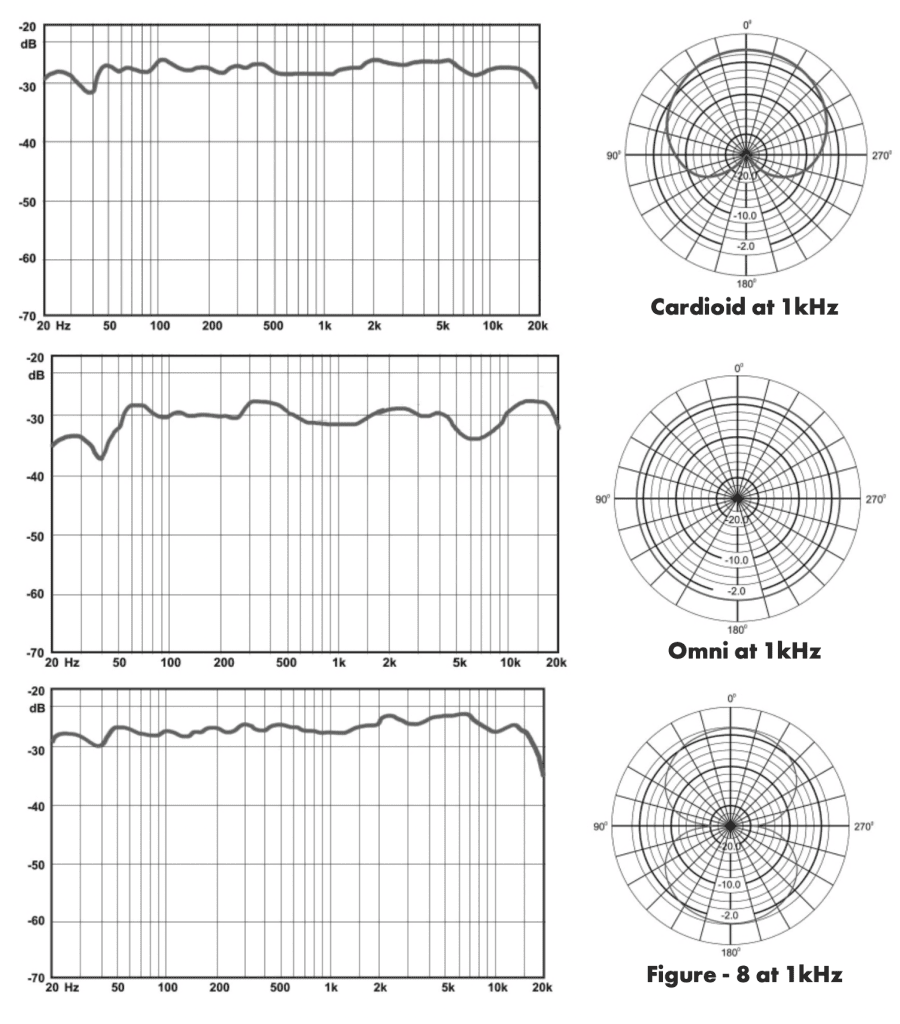
Looking at the spec sheet, we are met with exactly what you might expect from a modern microphone: a 20hz-20khz frequency range (slightly different for each polar pattern), a low self-noise of 11dB (A-Weighted), 130dB (A-weighted) of Dynamic Range, a signal-to-noise ratio of 82dB (A-Weighted), and a max SPL (before <0.5%THD) of 140dB. This definitely suggests that this will be a versatile microphone that will find many uses over many sources, both louder ones and softer ones.
In terms of polar patterns, the WA47 features a total of 9, which can be controlled via a control pot on the power supply, featuring a détente for each pattern. These 9 patterns are Omnidirectional, Figure-of-8 and Cardioid, with 3 additional ‘In-between’ patterns between Omni and Cardioid, and then another 3 patterns in between cardioid and Figure-of-8. This opens up a number of additional sonic options, and can be really useful in a number of situations, such as the first position to the left of Cardioid, which gives us a great, centre-focused pattern that doesn’t have the same pronounced proximity effect of a regular cardioid.
Get In a Warm Up
Before we put the microphone through its paces, there is always one thing to remember when it comes to anything that features tube-based circuitry, and that is letting it properly warm up. I personally like to get tube circuits on as soon as possible before a session. Some people say that a tube is ‘warm enough’ after 2-3 minutes, but to really get the most out of it, allow at least 20-30 minutes if you can
In Use.
With the tube nice and warm, there was only one place we could start this test, and that was with some vocals.
Putting the vocalist right on top of the mic does add some additional power to the lows and low-mids, that make the part feel weightier, without ever feeling muddy for the most part. The highs seem to retain their detail, and when you back off the mic a few inches, it really does seem to open up a considerable amount. Adding some great sonic options to your vocal arsenal. Some microphones paired with the right voice can be transformative, and with this microphone, that could be many vocal sounds out there.
This translates just as well over to spoken-word, giving a sort of authority when used close up, without becoming dull, while retaining more natural features of the narrator’s voice when backed off.
As well as shining on vocals, the WA-47 sounds great on a myriad of acoustic instruments.
The microphone’s fuller low-end adds additional body to acoustic guitar, while the mid-range retains presence, and that, along with the top-end, preserves the detail of the strings and sound of the pick. This can work really well on decent-to-amazing guitars, but can accentuate issues with some extremely cheap guitars that might already be too boomy, or too squeaky. But that is more down to the guitar than the mic.
Throwing the WA-47 up in front of a piano in figure-of-8 can give great results, and gave the piano a sound that was ‘more’ than how it sounded in the room. While still retaining the detail of what made this piano, this piano. My only upset was that I didn’t have a second one to try out some stereo miking on the piano.
And then there was the source I had the most fun on… the drum kit. The WA-47 immediately jumps out as the perfect candidate for use as a room mic, perfect for capturing and open sound of the room, while still retaining some body and helping create a decent dimensional image in Omnidirectional mode.
But that isn’t where the uses of the WA-47 stop on a drum kit; this would also make a great overhead, whether that’s mono in Omni mode, or when used with a second WA-47. Correctly positioned, you would probably be looking at 75+% of your drum sound from just that pair, before any close mics have been introduced.
Another solid idea would be to play around with capturing the drum kit with just a single stereo pair. Whether this is a pair of WA-47s in Blumlein, or a single WA-47 and a small diaphragm condenser (like Warm Audio’s very own WA-84) in a Mid/Side configuration. I am pretty confident the WA-47 won’t let you down in any of those situations.
That said, no microphone is perfect, and the WA-47 is no different. At the end of the day, it is a tube microphone, and while a tube doesn’t make something better or worse, it does bring something different; it is a microphone with its own character, and sometimes that character will be a mismatch with a source. And sometimes that’s different versions of the same source; one vocalist might blow you away, where another has their worst features accentuated. A microphone is always looking for that perfect source to shine on.
Feeling Weighed Down
One thing that is true about the WA-47 is that it is a pretty serious bit of kit. And while I mean that in many ways, the most important thing to note is how substantial it is in size and weight. If you are going to buy one of these, make sure you have at least a decent microphone stand. I tried it with 4 levels of stand: one that came free when purchasing another microphone, a £15 one, a £40 one, and an overkill £215 overhead mic stand. The top two options held the microphone firmly, without any noticeable drooping. The £15 worked well enough in an upright position, but the moment you started angling the boom, the droop began, and no one wants to hear any microphone droop and fall. The free microphone stand, as you can imagine, began drooping before I had really let go.
Also, earlier in the review I did mention some earlier apprehensions about the quality and potential longevity of the shock mount. And while I didn’t have any issues with it, you do have to be careful and double-check that you have tightened the nut adequately enough. I will be keeping an eye on how long it lasts, and will add an update should I have any issue in the future.
Final Thoughts
Does this perfectly imitate a vintage Neumann U47? Of course not. What does a vintage U47 even sound like? There are so many examples that don’t match in sound, but many match its vibe, or its way of elevating sound, and for many applications that is, in fact, what the Warm Audio WA-47 does. It evokes its own personality on many different sources, giving a certain ‘je ne sais quoi ’ that can often be missing in the home or project studio space.
Warm Audio themselves use terms such as ‘Rich ’, ’ Open ’, and “Pure Analog Warmth” to describe this product, and while I am not normally one to go for marketing terms, they aren’t wrong here. Overall, the sound is rich, without being overly dark; detail is retained without sounding sterile and clinical, and it adds warmth without losing a sense of openness.
In a studio full of transparent, accurate mics, sometimes you just need something with its own personality, and that is something the Warm Audio WA-47 has in droves.
I can’t imagine many home studios that wouldn’t be elevated with a WA-47 in their mic collection.
When it comes to alternatives, if you are looking for something similar to that U47 style of microphone, then it could be worth looking at the United Technologies Twin U48, which comes in at a higher price point (≈£1200), but also gives some more ‘U48’ sounding options as well. There are also many options at much higher price points.
For Tube Condensers in general, you could look at the Avantone Pro CV-12 (Reviewed Here), the CV-12 BLA (a version modded by Black Lion Audio, the Rode K2, or another Warm Audio ‘recreation ’, the WA-251. These mics range (in order) from around half the price to slightly higher.
Warm Audio WA-47
£759/€876/$949.99